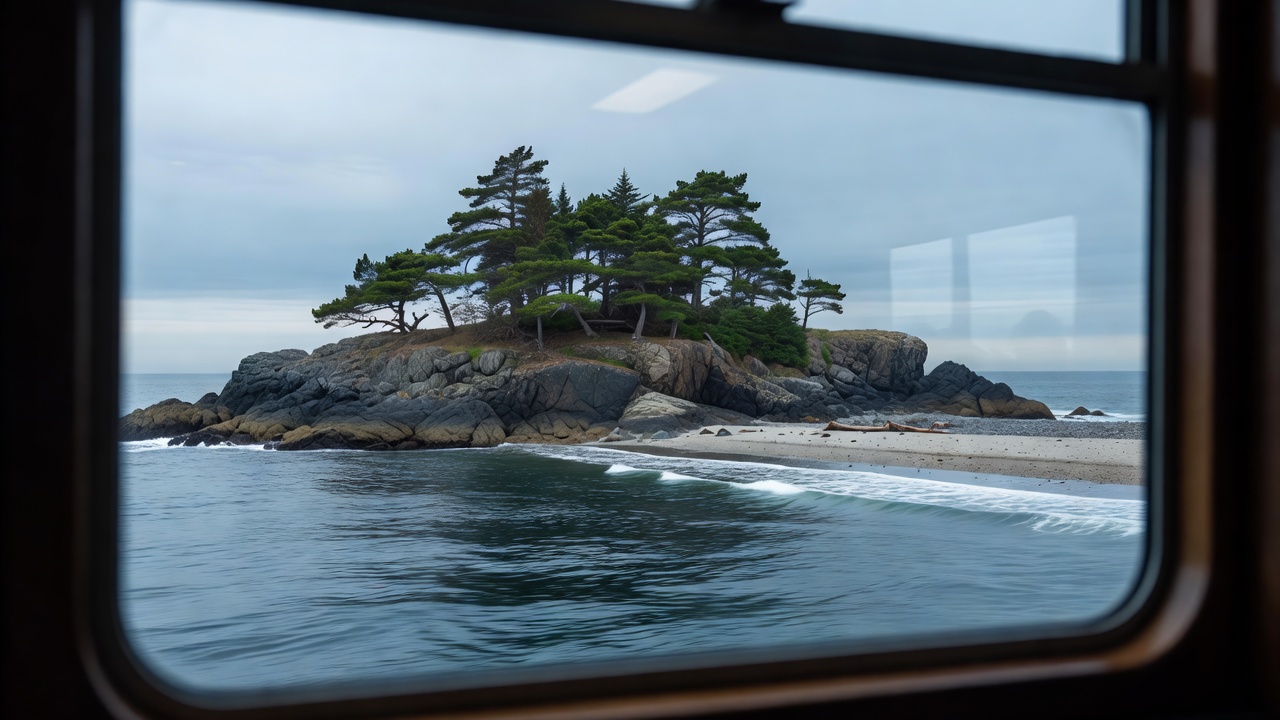
A scenic ferry route is not simply a line across an attractive map. The experience depends on how close the ship travels to land, how often the view changes, and where passengers can sit or stand. A short working crossing can offer a more absorbing sequence than a much longer passage spent beyond sight of the coast. Start by deciding whether you want enclosed water, a gradual island approach, or the feeling of leaving a continent behind.
Northern waters: read the shape of the coast
In western Norway, the crossing between Gudvangen and Kaupanger follows fjord landscapes where steep sides and branching water create a strong sense of scale. Treat it as a particular seasonal service to investigate, not a permanent promise of departure. Check the current operating period, boarding point and passenger arrangements before building a day around it. Cloud can hide the upper slopes while leaving the water-level scenery wonderfully distinct.
Scotland’s Oban–Craignure route offers a different rhythm: a working harbour departure, the surrounding islands and the approach to Mull. The route is useful precisely because it connects everyday places as well as providing a view. A crossing to an island is only part of the day; accommodation, island buses and the return sailing deserve as much attention as the outward photograph. Vehicle space and foot-passenger arrangements should be checked separately.
Atlantic edges: value the approaches
On Holyhead–Dublin, the broad Irish Sea can be the dominant middle chapter. The strongest visual detail often sits at either end: breakwaters, port equipment, harbour traffic and the changing relationship between the ship and shore. This is not a continuous coastal panorama. It suits a traveller who enjoys a sea passage in its own right and can appreciate a long horizon without expecting landmarks throughout.
Dover–Calais has a more compressed sense of separation. The cliffs around Dover can make the departure or arrival memorable, but visibility and the ship’s permitted passenger areas determine the actual view. Do not assume that a car-ferry service accepts foot passengers on every sailing. Nor should a port’s proximity to a town be mistaken for permission to walk through operational vehicle areas.
Southern waters: compare vessel types
Split–Supetar connects a busy mainland waterfront with Brač. Watch how the city gives way to the channel and how the island’s buildings become legible on approach. A conventional ferry and a fast passenger craft are not interchangeable scenic experiences. Seating position, outdoor access, motion and the arrival berth can all differ, even when the destination name looks familiar.
In Greece, Piraeus–Aegina offers another useful model: leaving a substantial port before the island comes into focus. Piraeus is large, and the gate matters. Conventional and high-speed services may provide different viewing opportunities and have different travel conditions. Confirm the actual service rather than borrowing expectations from another traveller’s photograph. Mediterranean sunshine also brings heat and glare, making shade and drinking water practical viewing equipment.
Choose with a small, honest shortlist
Compare routes using three questions. How much of the crossing remains close to land? Is the departure likely to be in daylight on your travel date? Does the intended vessel offer a suitable place to watch? These questions are more useful than a universal ranking of Europe’s “best” ferry routes. A traveller seeking quiet indoor observation may choose differently from someone hoping to spend most of the passage outside.
Keep a weather alternative and avoid treating wildlife sightings, clear summits or a particular sunset as deliverables. Ferries operate as transport, and safety decisions take priority over sightseeing. A changed vessel or closed deck can alter the experience without changing the route. Leave enough flexibility to enjoy the harbour town or an overnight stop if conditions make your original plan uncomfortable.
Check the source closest to the sailing
For Scottish routes, start with CalMac; for Croatian services, consult Jadrolinija. For any other route, use the operating company’s current information and the relevant port authority. Our examples describe geographic character, not a current timetable, fare quote or guarantee of operation. Read the boarding notes before committing, and connect the arrival to a realistic onward plan.